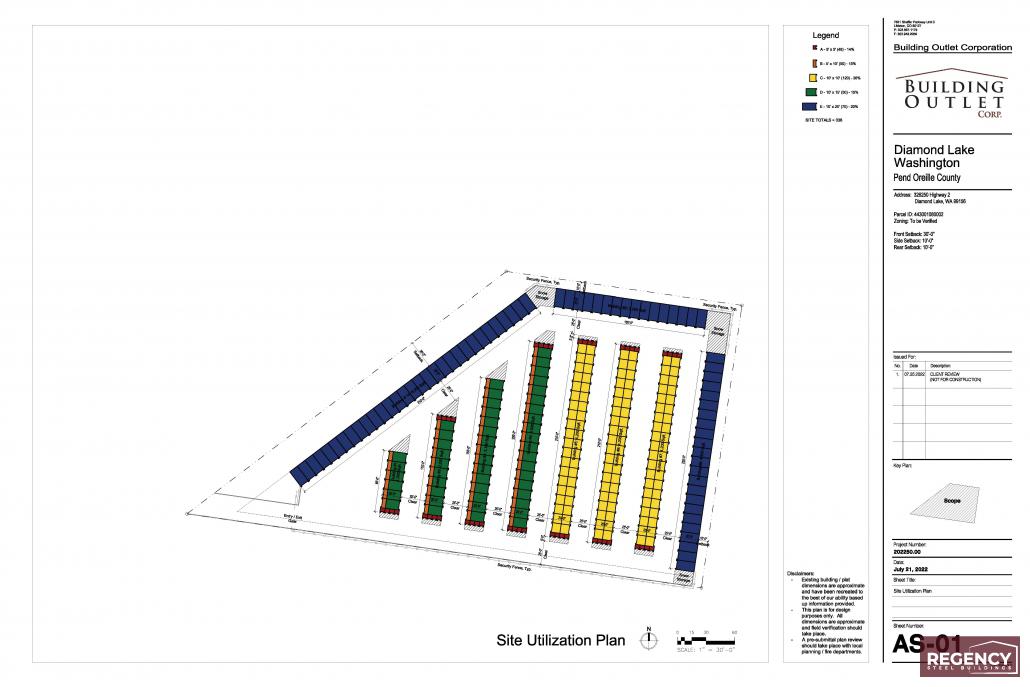
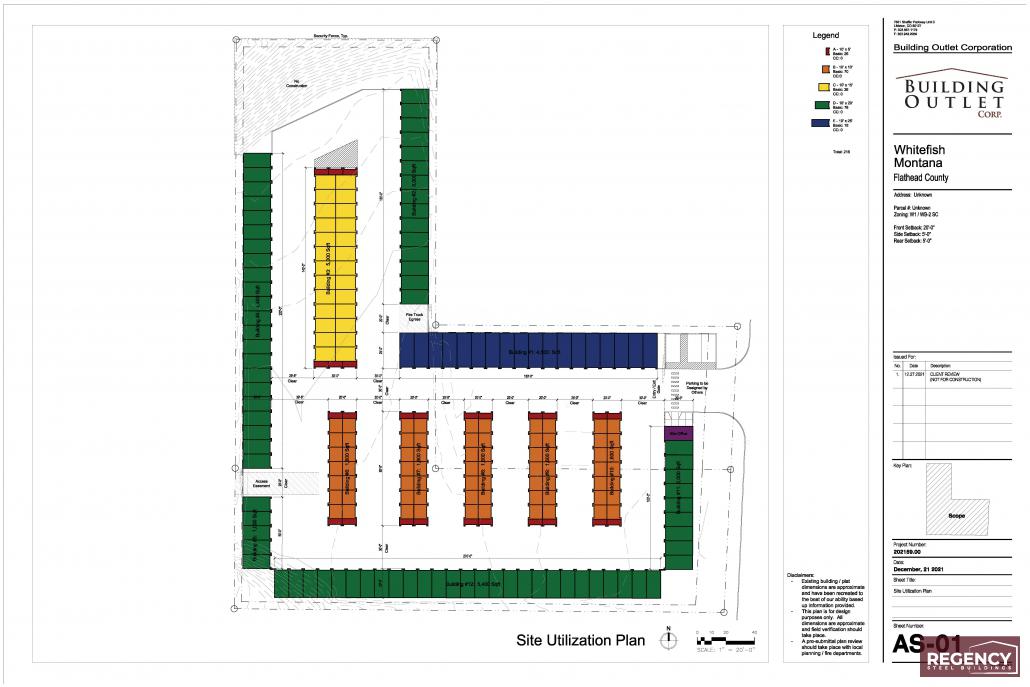
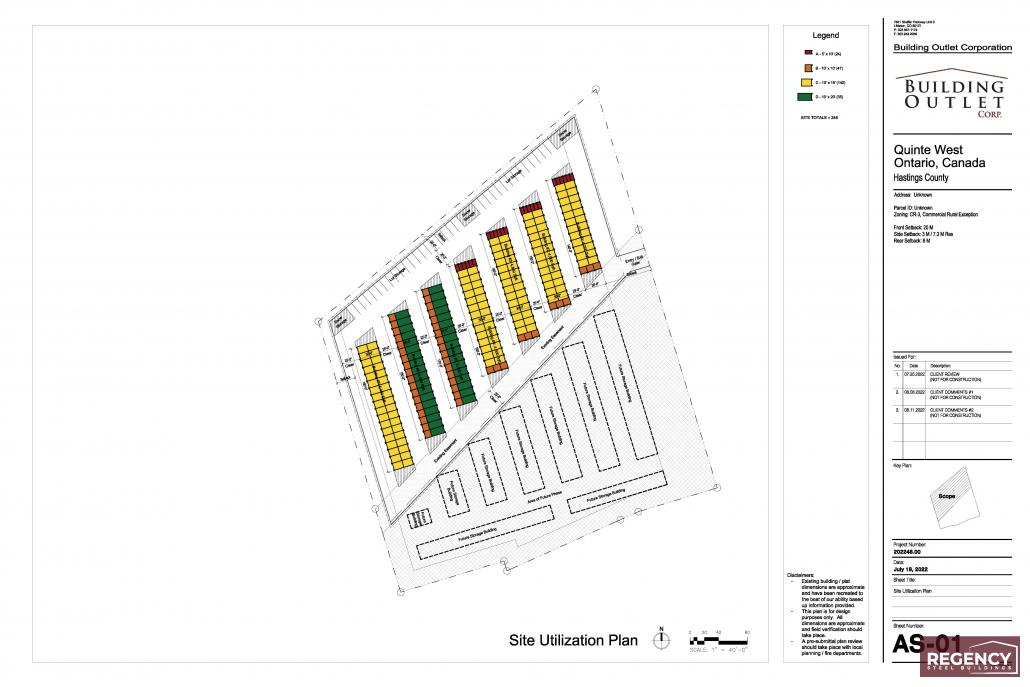
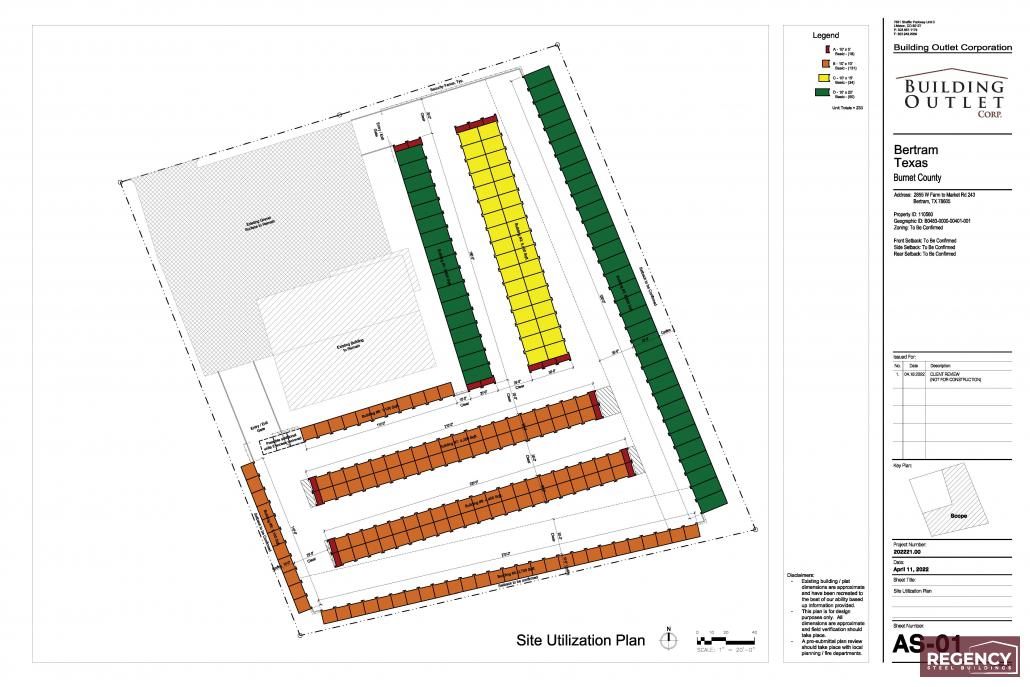
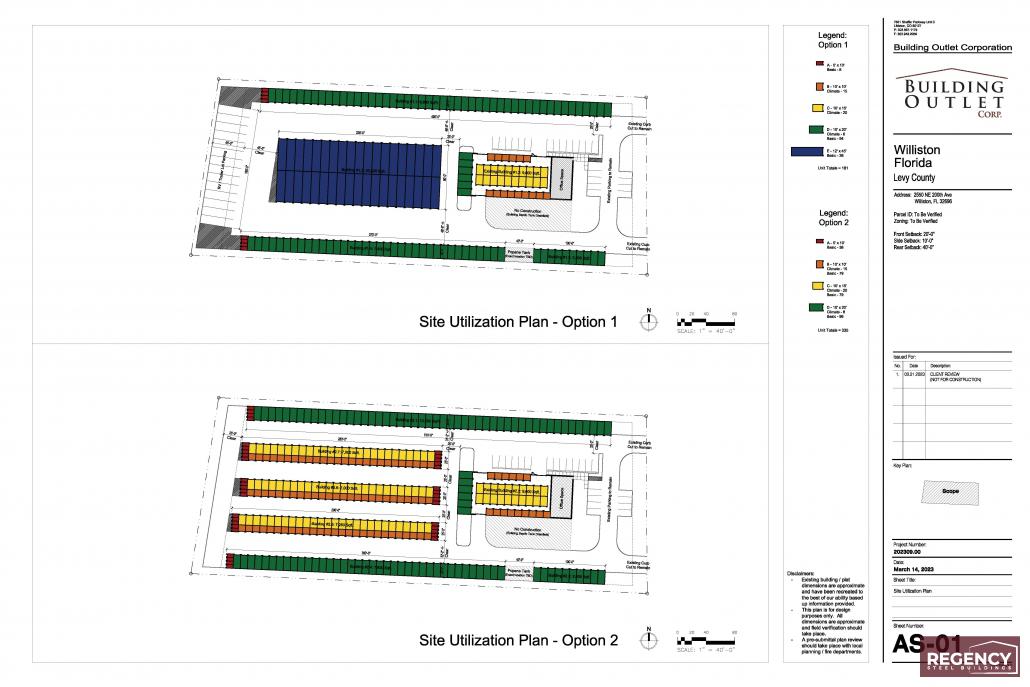
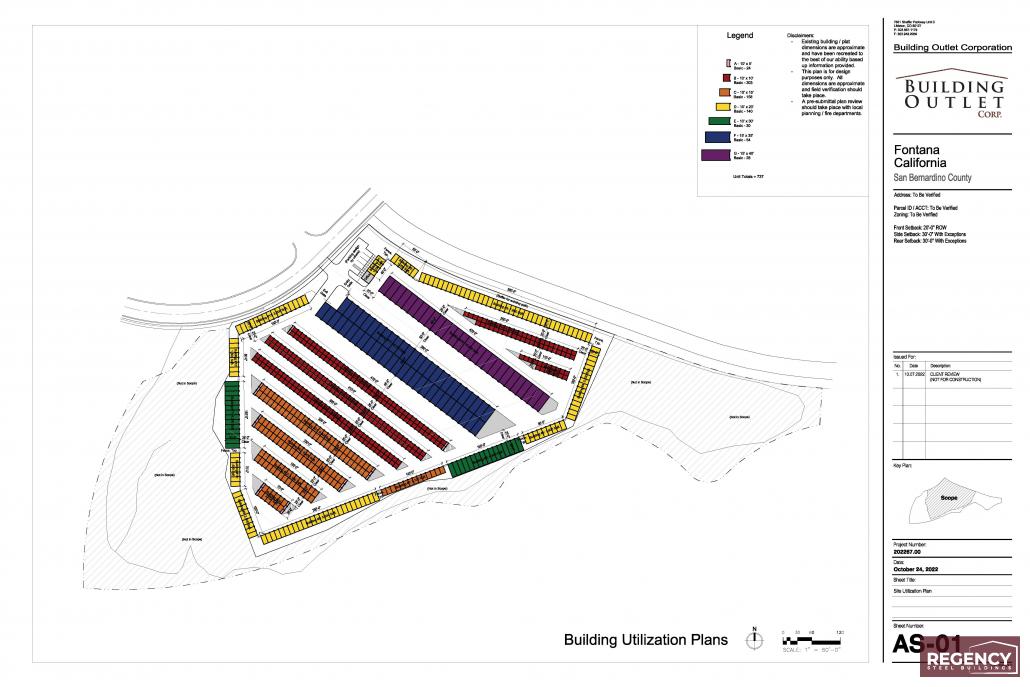
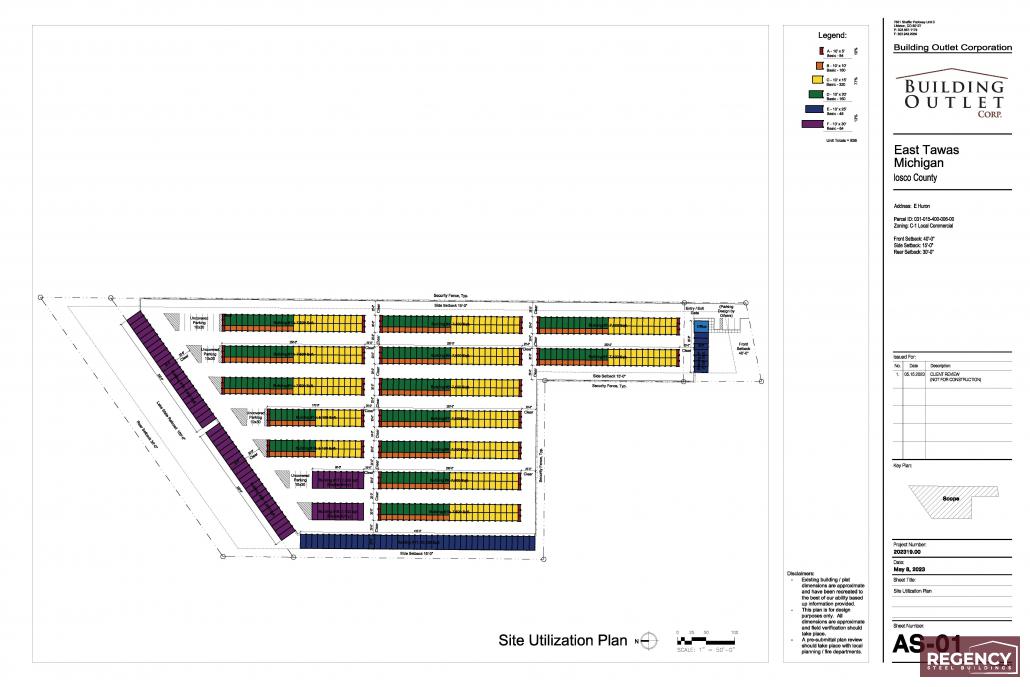
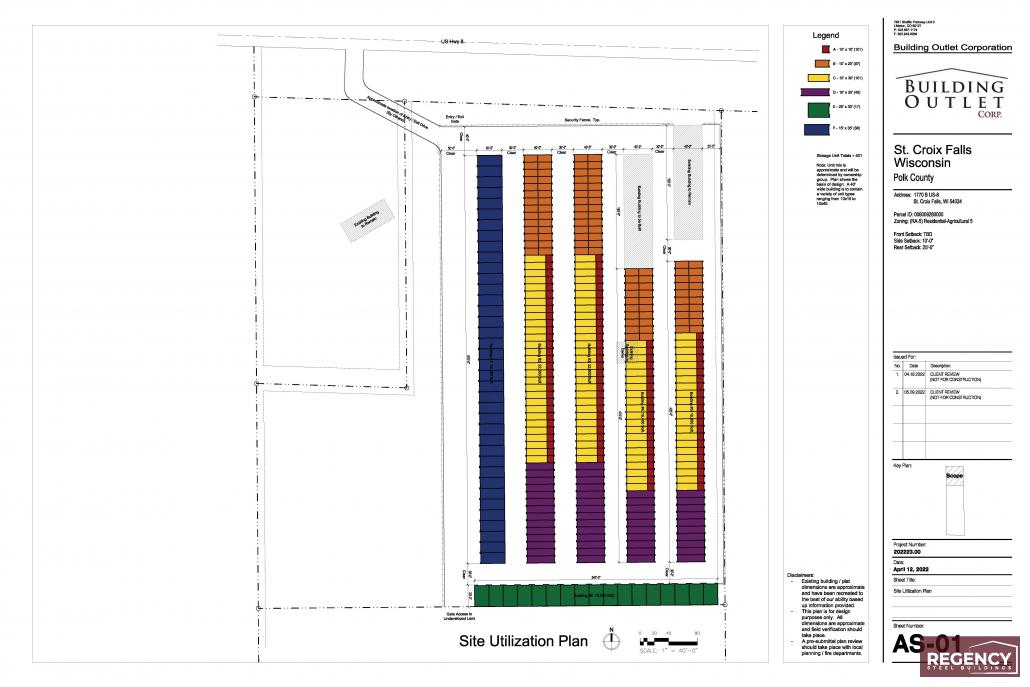
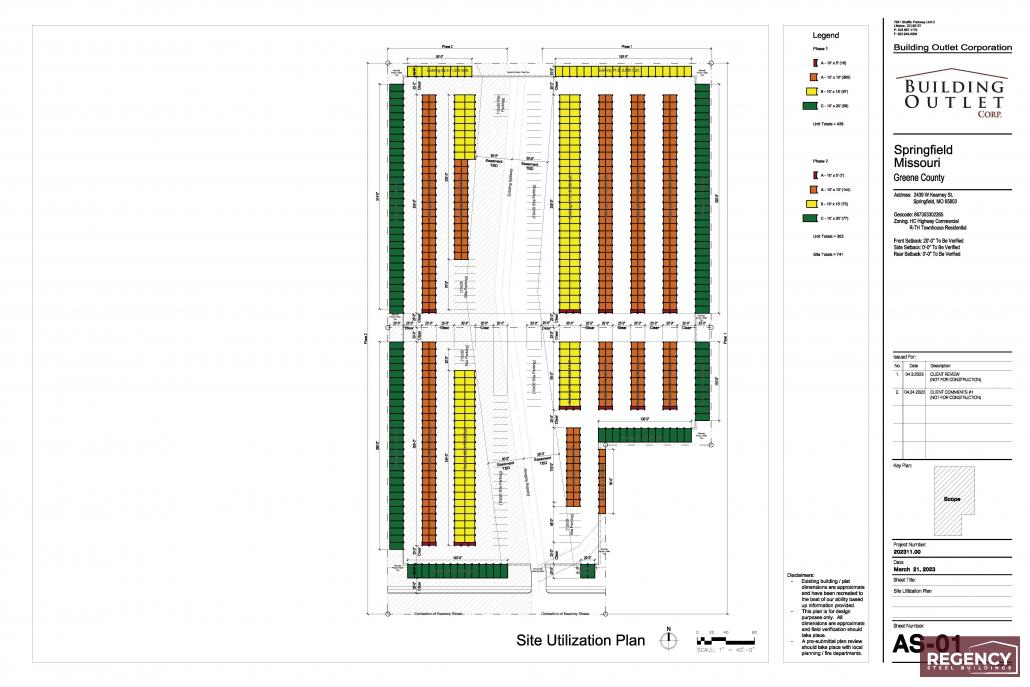
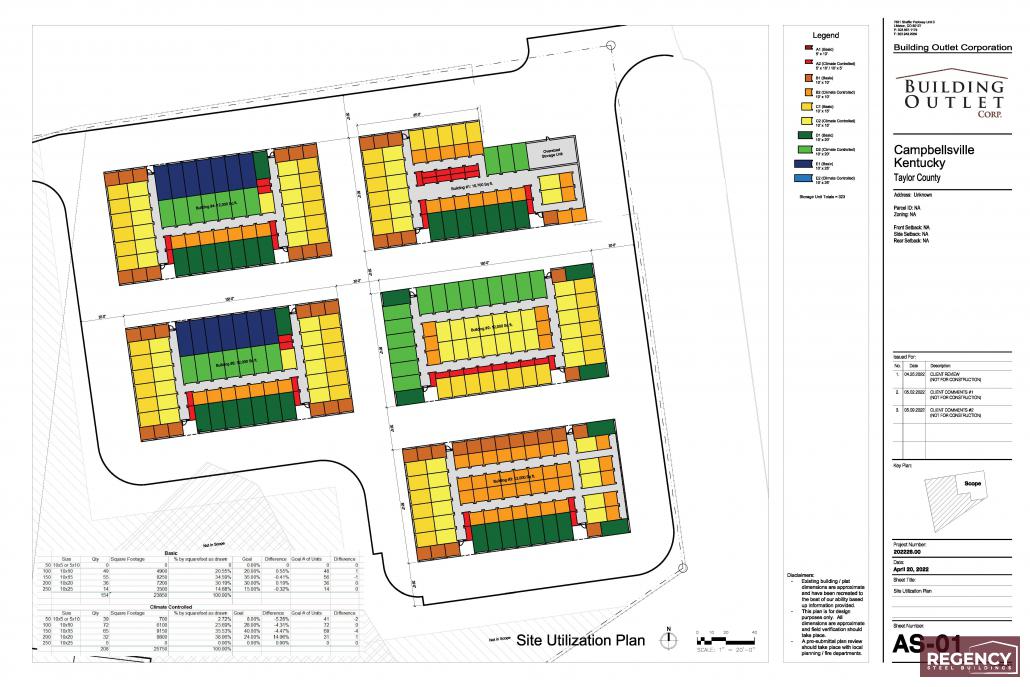
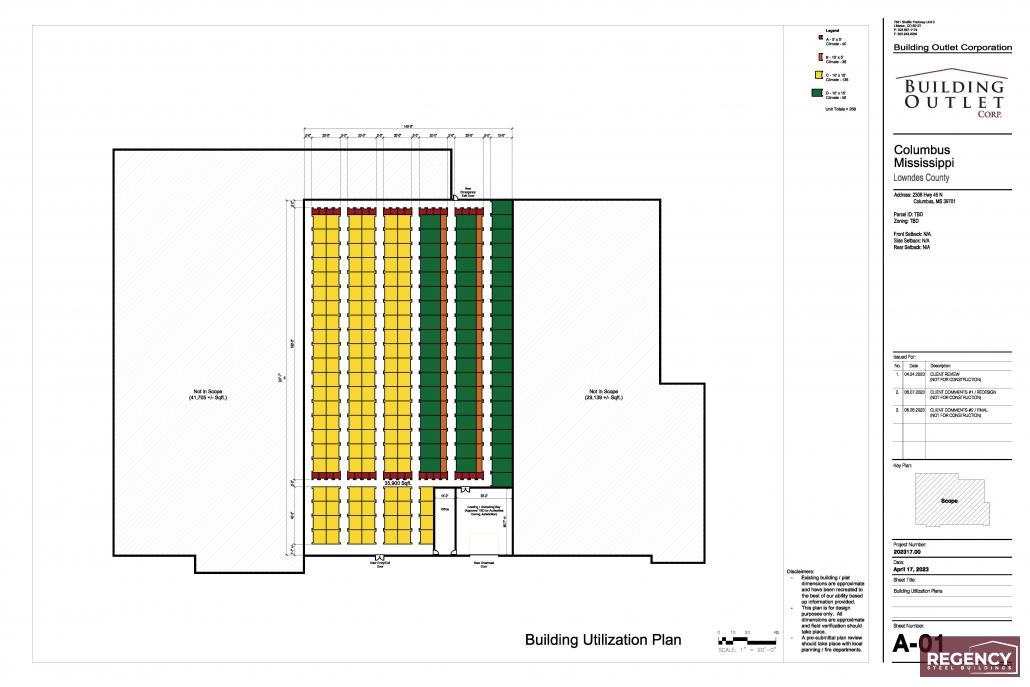
Building setbacks are legal distances required between buildings and property lines. Parking and drive aisles are typically allowed inside setback areas, but permanent structures are not. Front setbacks may include space for future road widening or landscaping.
Utility easements prohibit permanent structures. Always review deed restrictions and local planning & zoning regulations for additional site limits.
The rental office access should be located outside the security gate, with customer parking nearby. Handicap-accessible stalls must be clearly marked and positioned close to the entrance.
Approach and entrance design should allow two-way traffic and safe entry. Vehicle stacking before the security gate should accommodate at least three vehicles, with entrance widths of 30 ft minimum.
Drive Aisles & Circulation
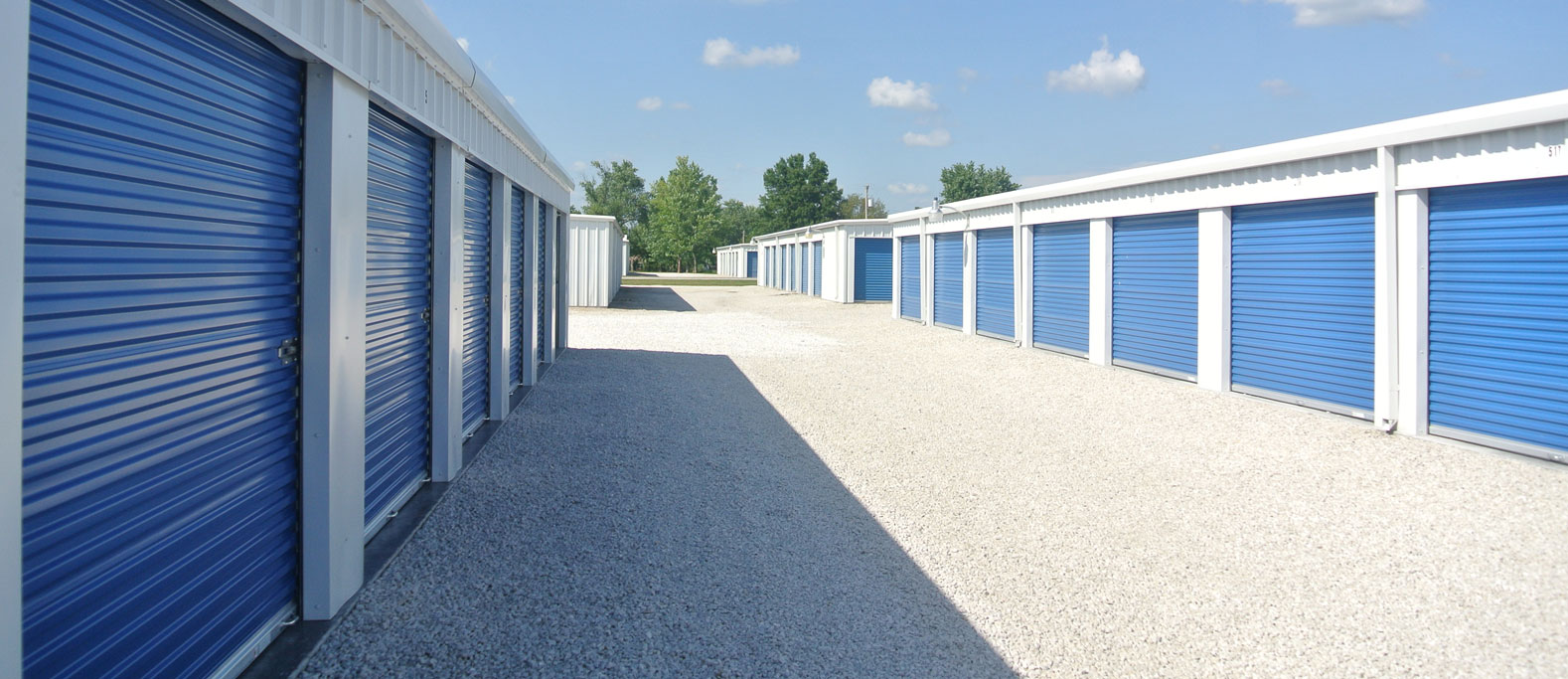
Drive aisles must be sized for commercial vehicles and unloading activity:
- Outside storage: 25 ft minimum parallel aisles; 30 ft minimum cross aisles.
- Allow for RV and fire engine turning radii per local fire marshal requirements.
- RV/Boat storage aisles: 35 ft for 60° angled parking; 55 ft for 90° parking.
Retention basins should sit at the lowest rear portion of the site, with grading designed to drain stormwater toward that location.
Gaps between buildings provide maintenance access, snow storage (in winter climates), and help preserve required setbacks.
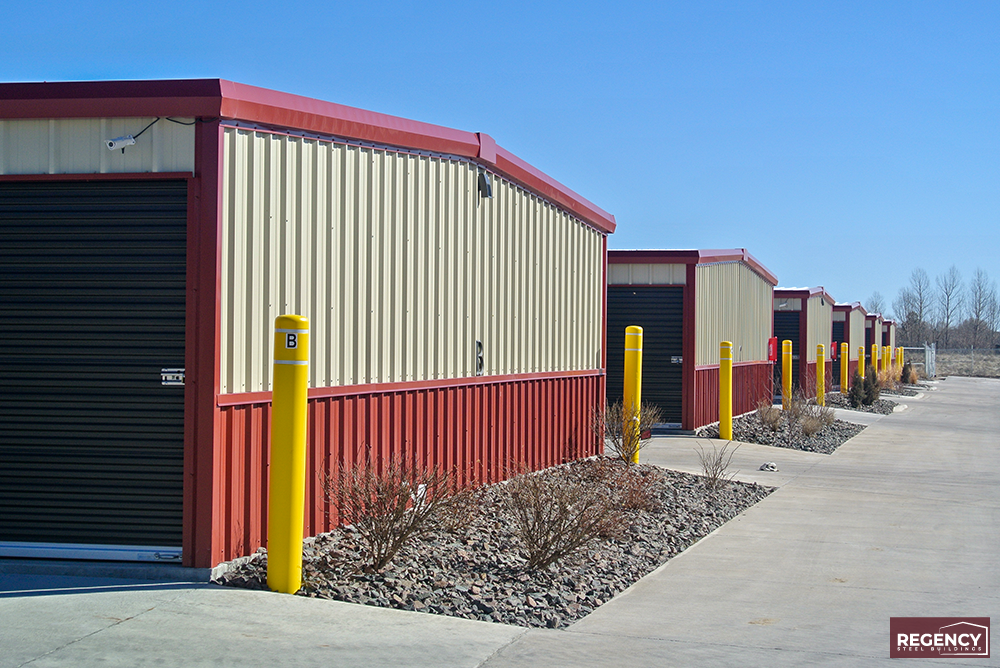
Cement-filled bollards should be installed at building corners to prevent vehicle damage.
Additional parking near interior storage buildings helps reduce aisle congestion during unloading.
Interior Storage Considerations
- Unit doors should open outward and be recessed to avoid blocking hallways.
- Use 4-foot-wide doors for easier movement of items and handcarts.
- Hallways should be at least 5 ft wide with handcarts available near entrances.
Building Orientation & Efficiency
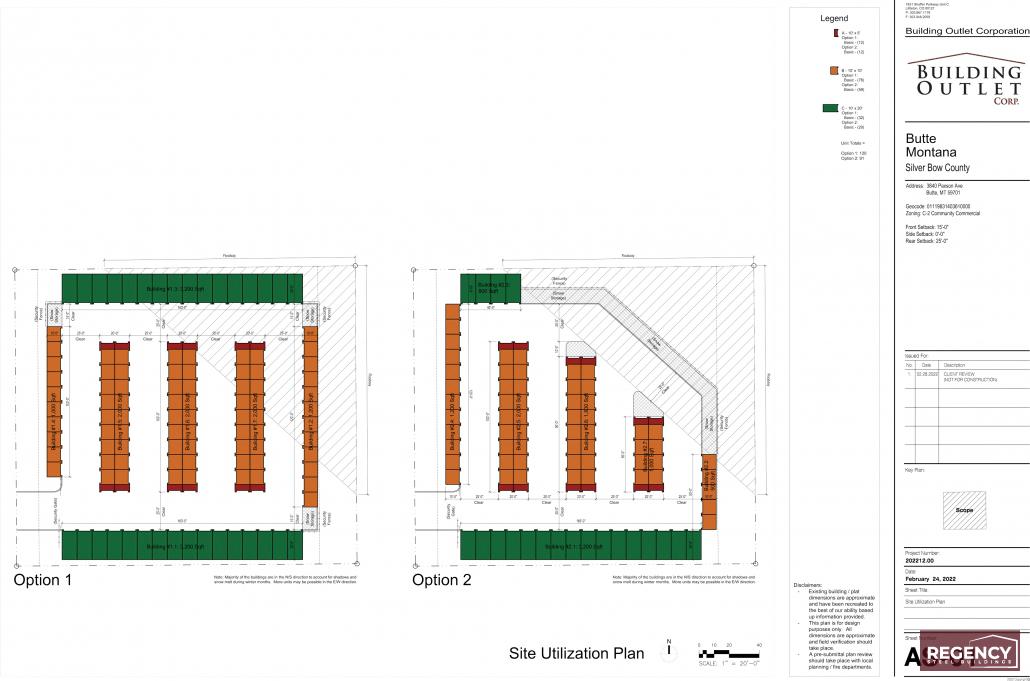
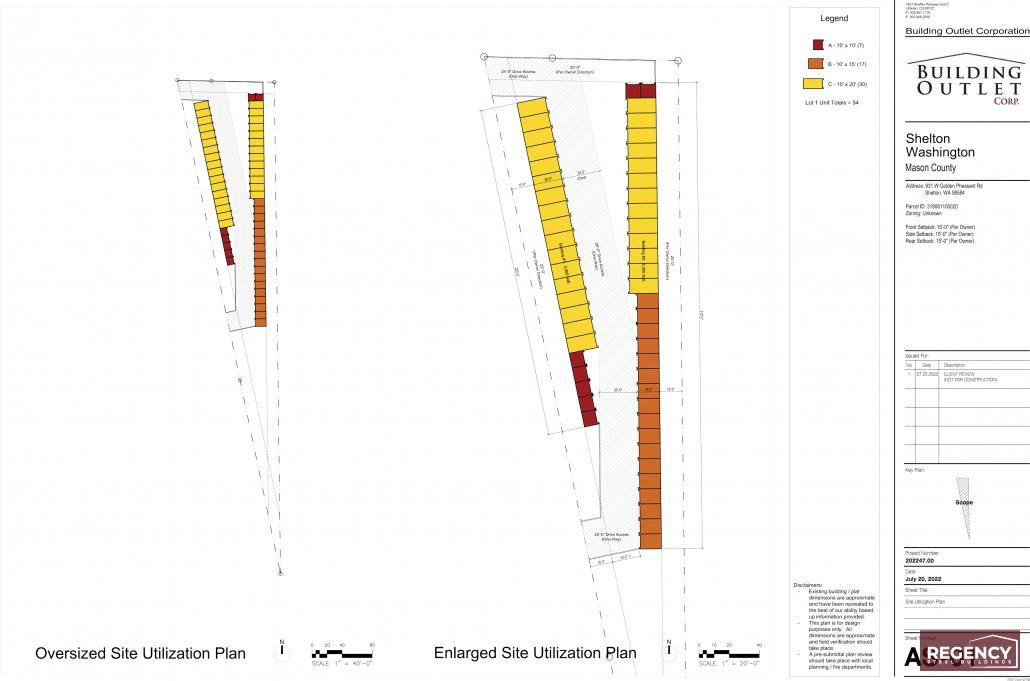
Aligning buildings parallel to the property’s longest dimension maximizes net rentable square footage and reduces the number of drive aisles needed.
Using a “Fortress Configuration”—placing buildings along the perimeter setbacks—improves site security and lowers fencing costs.
In winter climates, a north–south orientation helps snow melt evenly from roofs and prevents ice buildup in front of unit doors.